
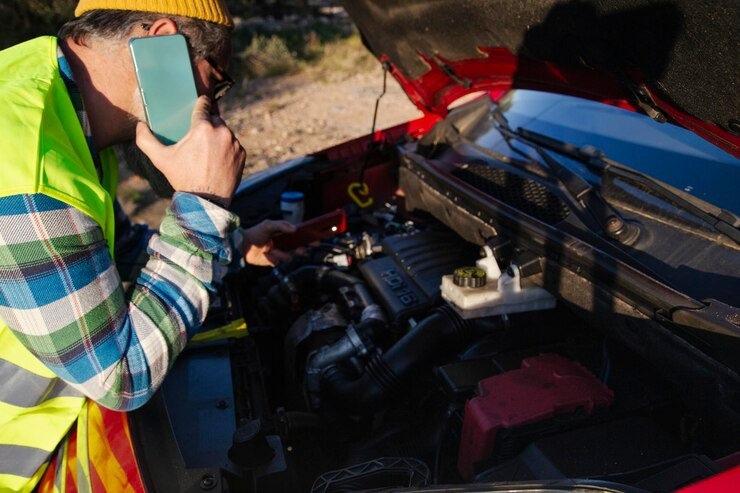
When your engine won’t turn over and dashboard lights flicker weakly, you’re facing one of the most common yet disruptive vehicle emergencies. Our professional jump start service delivers immediate battery assistance across every corner of London, combining technical expertise with genuine understanding of the stress a dead battery creates in your day.

A failed battery rarely announces itself. One moment you’re confident your car will start; the next, you’re stranded with commitments piling up. We resolve these specific scenarios: Whether it’s a simple jumpstart or you require breakdown recovery, stuck vehicle extraction, or towing service, we have you covered.
Complete electrical failure – Dashboard dark, no interior lights, absolute silence when turning the key. This indicates total battery depletion, often from leaving lights on overnight or an aging cell that finally surrendered.
Sluggish cranking with clicking sounds – The starter motor attempts engagement but lacks sufficient voltage to complete the sequence. This clicking pattern signals inadequate current flow, typically caused by corroded terminals, parasitic electrical drains, or cold-weather voltage drops affecting battery chemistry.
Intermittent starting problems – Your vehicle starts reliably some days but fails unpredictably on others. This inconsistency points to marginal battery capacity hovering at the failure threshold, where minor temperature changes or electrical load variations determine success or failure.
Post-accessory use failure – The battery dies after extended periods with radio, heating, or phone charging running while stationary. Modern vehicles contain dozens of computers drawing standby power; when combined with deliberate accessory use without the alternator replenishing charge, depletion accelerates dramatically. If your battery cannot be revived on-site, our battery replacement or refuelling services ensure your journey continues without delay.
We quote exact pricing before dispatching, calculated from your specific location with no hidden fees for time of day, traffic delays, or vehicle type. You’ll know the total cost within the first minute of contact. Payment processes through multiple methods including card over phone, contactless on-site, or invoice for fleet accounts.
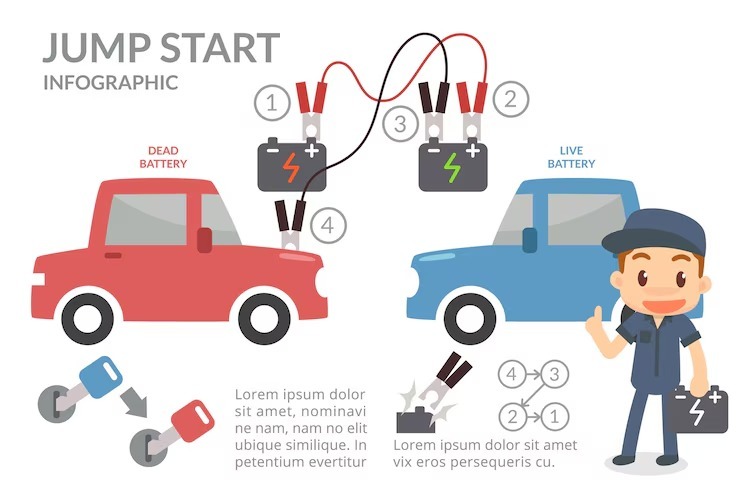
Modern vehicles contain sophisticated electronics managing everything from fuel injection to stability control. Improper jump starting can generate voltage spikes exceeding 400 volts, permanently damaging control modules costing thousands to replace. Our technicians follow manufacturer-specific protocols for each vehicle type:
European vehicles (BMW, Mercedes, Audi, Volkswagen) require connection to designated chassis jump points rather than battery terminals directly, protecting sensitive gateway modules and preventing communication network corruption.
Hybrid and electric vehicles demand specialized procedures isolating high-voltage systems from 12V auxiliary batteries. Incorrect jump starting methods can trigger permanent fault codes requiring dealer-level diagnostics to clear.
Start-stop equipped vehicles use enhanced flooded batteries (EFB) or absorbent glass mat (AGM) technology with different charging characteristics. We verify battery type before applying current, preventing thermal damage from inappropriate charge rates.
We deploy professional-grade lithium jump starters providing 2000-4000 peak amps—substantially more than consumer units offering 400-800 amps. This capacity matters because:
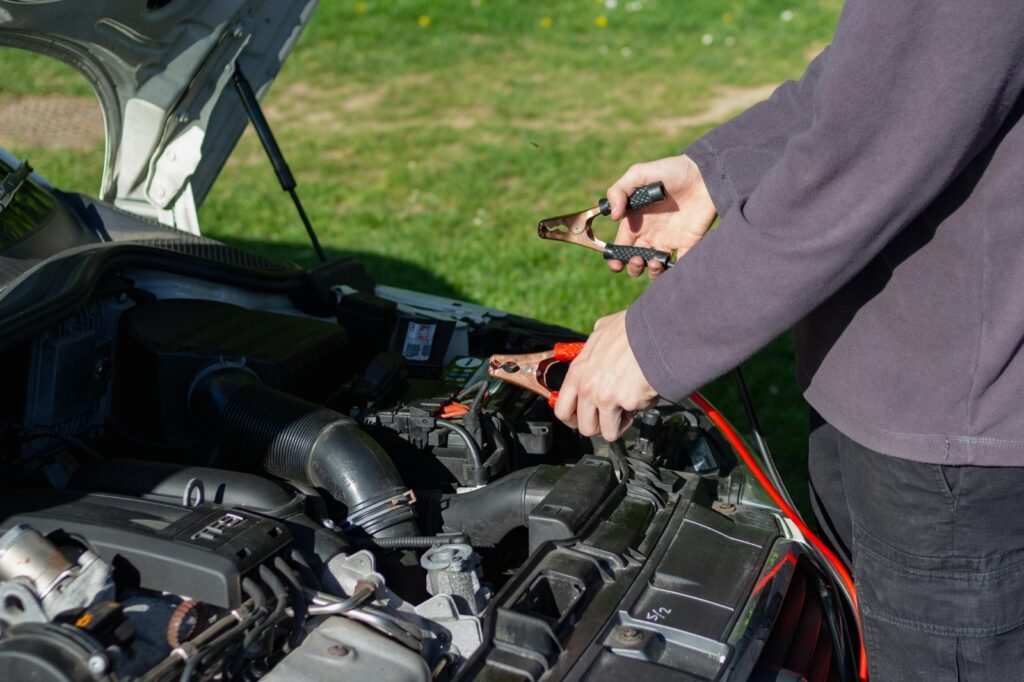
Our units incorporate reverse polarity protection, spark suppression, and voltage regulation, eliminating the risks inherent in traditional jumper cables where human error can cause catastrophic damage.
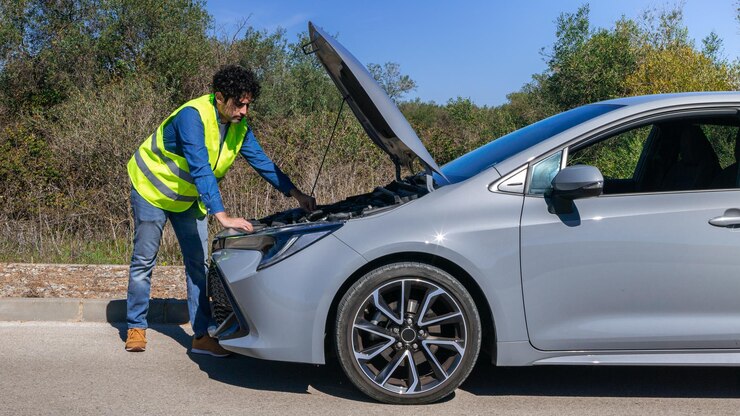
London’s average traffic speed hovers around 7-8 mph during peak hours. Your alternator requires approximately 1500 RPM (roughly 30 mph in higher gears) to generate sufficient voltage for both running the vehicle and recharging the battery. Extended idling at traffic lights barely maintains charge, while frequent starting in congested conditions drains more power than idling replenishes. A typical commute from Stratford to Westminster might include 40+ stop-start cycles, each consuming battery capacity without adequate recharge opportunity.
Battery capacity drops approximately 35% at 0°C compared to optimal operating temperature. This occurs because chemical reactions within lead-acid cells slow dramatically in cold conditions, reducing the electrolyte’s ability to facilitate electron flow. Simultaneously, engine oil thickens, requiring more current to rotate the starter motor. Damp conditions accelerate terminal corrosion, creating resistance that further impedes current delivery. The combination explains why batteries functioning adequately in September fail repeatedly by November.
Lead-acid batteries deteriorate through sulfation—microscopic lead sulfate crystals forming on negative plates during discharge. Repeated shallow cycling (common in urban driving) prevents complete recharge, allowing crystals to harden permanently and reduce available plate surface area. After approximately 1000-1500 charge cycles (3-5 years of typical use), capacity diminishes to roughly 60% of original specification. At this threshold, marginal reserve capacity means any additional stress—cold weather, extended accessory use, or short journeys—triggers failure.
Modern vehicles contain 50-100 electronic control units maintaining continuous memory functions. Normal parasitic draw ranges from 25-50 milliamps; however, faults in modules, aftermarket installations (dashcams, trackers, alarms), or software glitches can increase draw to 200-500 milliamps. At 300mA continuous drain, a 60Ah battery depletes completely in approximately 8 days. Many drivers discover this only after returning from holiday or when working from home changes their usage pattern.

In addition to battery assistance, we also offer 24/7 emergency mobile tyre fitting, bringing the correct tyre and professional equipment directly to your location to get you safely back on the road without delay.
Post-start verification – Using diagnostic equipment, we confirm charging system output (should produce 13.8-14.4V at idle) and provide guidance on driving duration needed for adequate recharge—typically 30-45 minutes of continuous operation above 2000 RPM.
Our technicians assess whether simple jump starting resolves your situation or if underlying problems require different intervention:
Charging system failure – If battery voltage doesn’t rise above 13.5V with engine running, the alternator isn’t charging. Continuing to drive will drain the battery again within 30-60 minutes. We identify this immediately and recommend appropriate recovery to repair facilities.
Starter motor mechanical failure – Solid clicking without any cranking motion indicates starter motor solenoid engagement but motor failure to rotate. Jump starting cannot resolve mechanical component failure.
Severe battery degradation – Batteries reading below 10.5V often contain internal cell damage preventing charge acceptance. These require replacement rather than jump starting, which we detect through voltage testing and recommend direct recovery to prevent you experiencing repeated breakdown shortly after.
Fuel system or ignition problems – When the engine cranks vigorously but doesn’t fire, the issue isn’t electrical supply but fuel delivery, ignition components, or engine management faults requiring diagnostic attention beyond roadside assistance scope.
In these scenarios, we seamlessly transition to our breakdown recovery service, loading your vehicle onto professional transport and delivering it to your preferred garage or home address. This integrated capability means one call resolves your situation regardless of complexity—you’re not stranded awaiting a second service provider.
When the situation requires more than a jump start, one call handles everything—contact us to arrange immediate assistance, or check our live service coverage on Google Maps for nearby support.

Our rapid response network operates throughout the capital with average arrival times of 25-40 minutes depending on traffic conditions and your specific location.
Lambeth, Wandsworth, Merton, Croydon, Sutton, Clapham, Brixton, Tooting (SW1-20, CR0-8)
Richmond upon Thames, Kingston upon Thames, Hounslow, Hillingdon, Havering, serving residential areas and business parks across the Greater London boundary
M25 orbital, M1, M4, M11, M20, M23, A40, A12, A13, A3, A2, North Circular (A406), with specialist motorway protocols ensuring safe recovery from high-speed environments
We operate 24 hours daily including weekends, bank holidays, and throughout the night when traditional breakdown services impose premium surcharges or extended delays. Whether you’re in a hospital car park at 3 AM or stuck outside a client meeting in Canary Wharf at midday, we respond with identical urgency and professionalism.
Westminster, Marylebone, Mayfair, Soho, Fitzrovia, Holborn, Bloomsbury, City of London (EC1-4, WC1-2, W1A-W)
Paddington, Bayswater, Acton, Chiswick, Ealing, Hammersmith, Kensington, Notting Hill, Shepherd’s Bush (W2-14)
Islington, Camden, Barnet, Haringey, Enfield, Finsbury Park, Highgate, Wood Green (N1-19)
Brent, Harrow, Wembley, Willesden, Hampstead, Golders Green (NW1-11, NW26)
Tower Hamlets, Newham, Hackney, Waltham Forest, Redbridge, Barking & Dagenham, Stratford, Canary Wharf (E1-20)
Southwark, Lewisham, Greenwich, Bromley, Bexley, Deptford, Woolwich (SE1-28)


Our average response time is 25–40 minutes depending on your location and traffic conditions. We operate 24/7 across all London postcodes, including Central, North, South, East, and West London. For motorway breakdowns on the M25, M1, M4, or other major routes, we prioritize dispatch due to safety concerns.
We provide transparent, fixed pricing with no hidden fees. The cost is quoted before dispatch based on your exact location. There are no additional charges for time of day, weekends, bank holidays, or vehicle type. Payment can be made via card over the phone, contactless on-site, or invoice for fleet accounts.
Yes, we service all vehicle types including cars, vans, SUVs, motorcycles, trucks, Luton vans, minibuses, and HGVs. We also have specialized expertise with hybrid and electric vehicles, diesel engines, and modern vehicles with start-stop systems. Our technicians follow manufacturer-specific protocols to protect sensitive electronics.
Our technicians perform diagnostic testing to identify if the issue is a dead battery or a deeper problem like alternator failure, starter motor issues, or severe battery degradation. If jump starting won’t resolve your situation, we seamlessly transition to our breakdown recovery service, transporting your vehicle to your preferred garage or home address.
No. We maintain fixed pricing 24/7, 365 days per year. There are no premium surcharges for nights, weekends, bank holidays, or early morning callouts. The price quoted when you call is the price you pay.
Yes. Our professional-grade lithium jump starters provide 2000–4000 peak amps, powerful enough for completely depleted batteries, diesel engines, and larger engines. If the battery shows severe internal damage (below 10.5V) or won’t accept a charge, we’ll recommend immediate replacement and can provide recovery services.
No membership or subscription is required. We operate on a pay-per-use basis with transparent pricing. Just call or WhatsApp when you need assistance, and we’ll dispatch immediately. Perfect for drivers who don’t want annual breakdown cover fees or visitors to London needing immediate help.
Yes. We regularly assist drivers in underground car parks, multi-storey facilities, residential parking areas, and restricted zones throughout London. Our technicians carry portable equipment suitable for confined spaces and coordinate with building management when necessary.
We cover all London postcodes, including:
We also service all 33 London boroughs and provide specialist motorway response on the M25, M1, M4, M11, M20, M23, and major A-roads including the North Circular A406.
Yes. All our technicians are fully trained in modern vehicle electrical systems and hold relevant certifications. We carry full public liability insurance and professional indemnity cover. Our operators understand manufacturer-specific jump start protocols to prevent voltage spike damage to complex electronics.
After a successful jump start, drive continuously for at least 45 minutes, keeping engine speed above 2000 RPM (~30+ mph). This allows your alternator to recharge the battery. Avoid heavy electrical loads (heated seats, max air conditioning) immediately. If your battery is older than 3–4 years, consider testing or replacing it within 48 hours.
We accept multiple payment methods: card over the phone, contactless on-site, bank transfer, and invoice for business/fleet accounts. All pricing is confirmed before dispatch, so there are no surprises.
Copyright 2024 © All Right Reserved.